Through activities like wood cutting, nail hammering, and structure building under adult supervision, over ten children collaboratively create features such as a “Mud Kitchen” and wooden slide in the free play garden of Yongtai Huayuan on Dongming Road. This 300-square-meter “Child Joy Space” has transformed into a delightful playground for children.
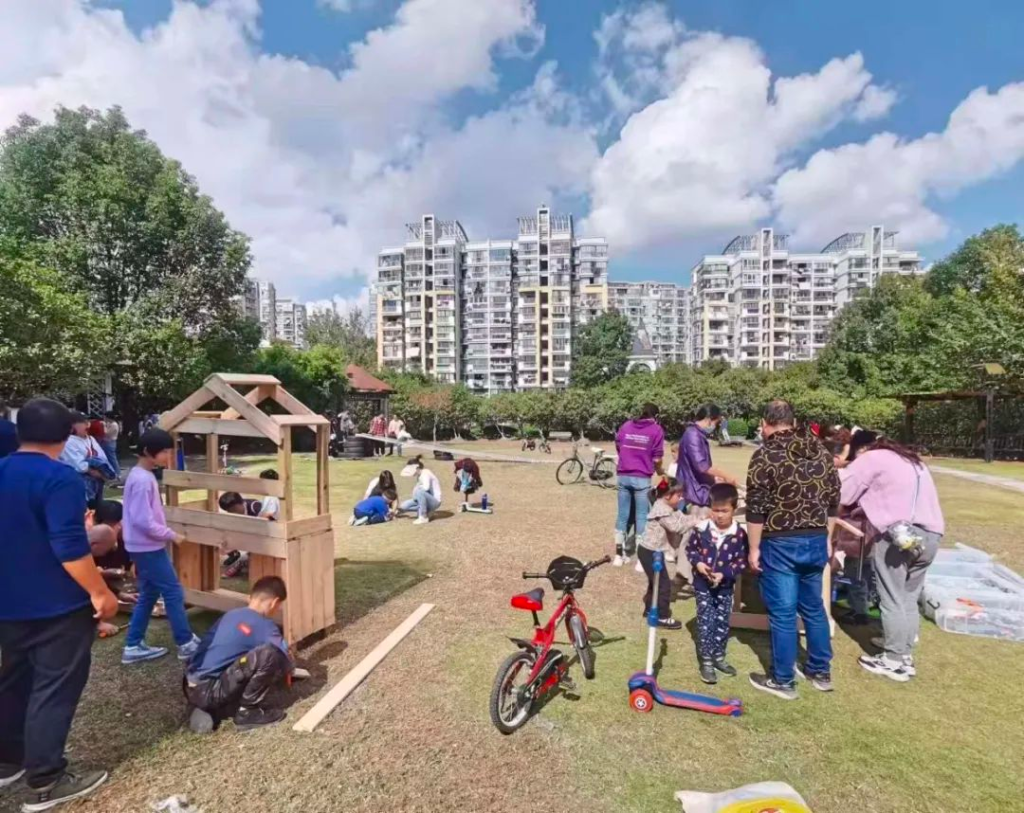
Pudong New District initiated colorful community construction in 2016, achieving full implementation by 2018. In 2022, the National Development and Reform Commission and other key agencies issued the “Guiding Opinions on Promoting Child-Friendly City Construction,” leading to an organic integration of child-friendly initiatives and colorful community projects under the “Child Joy Space” theme. This initiative expanded the focus from nine to ten categories of public spaces, enriching community engagement.
Lv Min, Deputy Director of the District Planning Management Affairs Center, emphasized that “Child Joy Space” represents a thematic enhancement of community development and reflects a cross-disciplinary collaboration, further extending the initiative to create a “15-minute community life circle.” In 2022, various neighborhoods successfully completed over ten child-friendly space projects.
Dongming Road Street leveraged community gardens to facilitate community renewal, encouraging participation from residents of all ages, especially children, in constructing “Child Joy Space.” This effort has led to multiple completed projects promoting co-construction, co-governance, and shared community benefits.
With over 3,000 households and more than 8,000 residents, Yongtai Huayuan, which includes over 200 preschoolers, offers a free play garden that serves as a joyful environment for local children. By fostering child participation, the community cultivates play opportunities that support children’s physical and mental health.
Listening to children’s voices and addressing their needs are fundamental to the development of child-friendly spaces. Through a variety of engaging activities, children can experience the happiness of community life.
Liu Yue, Associate Professor at Tongji University’s School of Architecture and Urban Planning, asserts that community gardens symbolize the essence of child-friendly cities. “Everyone bears responsibility for social governance, which enhances efficiency and sustainability.”
Children from Anju Garden on Dongming Road envision a garden filled with aliens and spaceships. In support of their dreams and the growth of space exploration, collaborative efforts have brought their visions to life, resulting in the creation of the Planet Garden.
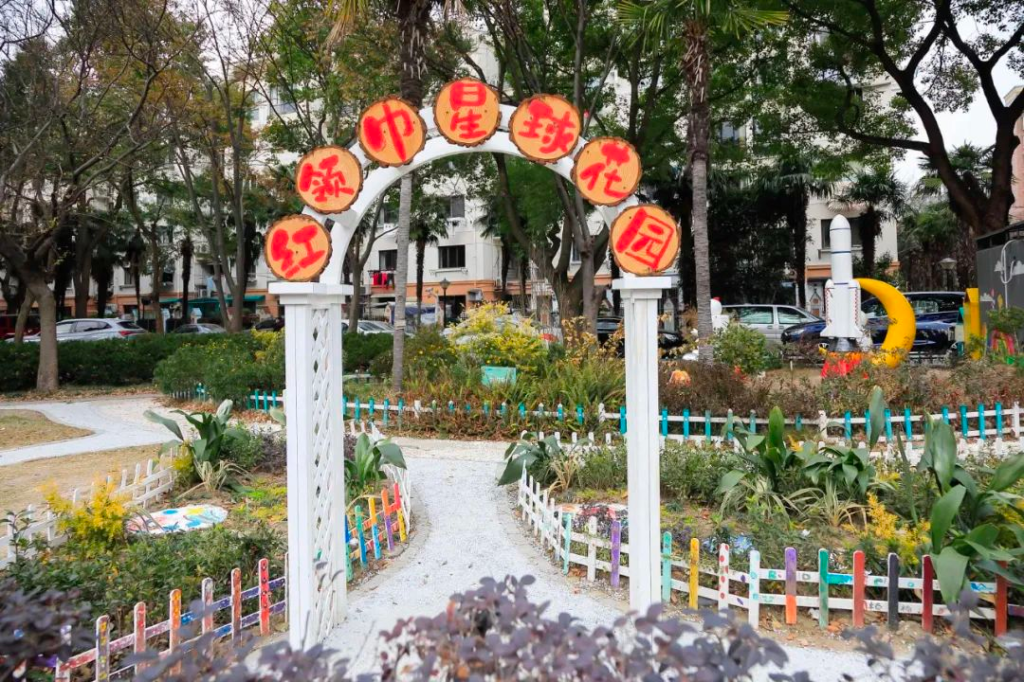
The Planet Garden’s theme revolves around the solar system, spaceships, and astronauts. A community committee representative explained that the garden was inspired by a child’s idea, with children actively participating in its design and management. Here, children not only learn about space but also engage in creative activities like doodling and planting.
The report from the 20th National Congress of the Communist Party of China emphasized the need for measures that enhance public welfare and address pressing community issues. The district prioritizes child development through the establishment of child-friendly spaces, furthering the vision of child-friendly urban areas. Earlier this year, the “Pudong New District Child-Friendly Urban Planning Guidelines” were released as the first national framework for child-friendly city construction. The district aims to enhance the community planner system, fostering exemplary child-friendly spaces through expert design guidance.
This year, the Planning Resources Bureau and the District Women’s and Children’s Work Committee have continued to apply the “Child Joy Space” initiative as a practical project, targeting the completion of ten child-friendly spaces by year-end. As of February, two projects have been finalized, with progress ongoing on others.

 CCFU2089