The Landscape Planning Institute of Huaxin Design Group, affiliated with the Wuxi Child-Friendly Space Research Center, is the first landscape design team in Wuxi to receive a Class A qualification in landscape architecture. In recognition of its commitment to establishing Wuxi as a National Child-Friendly City, the institute was jointly designated as the first city-level Child-Friendly Space Research Center in China by the Wuxi Women’s Federation, the Wuxi Survey and Design Association, and the Wuxi Civil and Architectural Engineering Society. The group also houses an Urban Renewal Research Center. Since the establishment of the research center, the Landscape Planning Institute has assembled multidisciplinary teams specializing in landscape architecture, transportation, building design, and environmental studies to undertake a range of planning projects, standard-setting initiatives, and practical implementation efforts.
This article, from the perspective of a local urban planning designer in Wuxi, reflects on the personal experiences of contributing to the city’s initiative to become a National Child-Friendly City. It offers an in-depth discussion of the practices and considerations involved in developing child-friendly urban spaces in Wuxi. Emphasizing the overarching concept of “Nurturing through Environment,” it showcases Wuxi’s distinctive approach of creating “Five Developmental Spaces” to foster a city environment that is welcoming and nurturing for children.
1. Background
I am a native of Wuxi, born and raised in the alleys beneath Huishan Mountain and along the Grand Canal. For over a decade, I have been actively involved in urban space planning and design on the front lines of my hometown. The concept of “human touch” within a city is quite familiar to me. In the 1990s, Wuxi’s city slogan was well-known: “Wuxi is full of warmth and water.” While Wuxi back then was not as prosperous as it is today, life in the city’s alleys reflected a sense of genuine community. In the evenings, streets would become safe, shared spaces for neighborhoods, where children could roam freely from door to door, playing, performing, and singing together. However, in today’s urban spaces, parents are reluctant to let their children go out alone, and many children are similarly unwilling to leave home. The rise of phenomena such as “children glued to devices,” “indoor-confined children,” and “nature-deficient children” has contributed to significant issues like social anxiety, obesity, and myopia, all of which adversely affect children’s healthy development.
As a father to an 8-year-old daughter, my primary concern is whether she will become reluctant to go outside, interact with others, or remain in her own world—an increasingly prevalent issue among those around me. I believe these challenges are consequences of rapid urbanization, which has gradually eroded the sense of community within cities. The current national emphasis on urban renewal seeks to address urban issues by revitalizing and optimizing existing spaces. Yet, throughout my work, I have consistently felt that the present urban renewal process lacks a strong human-centered framework, and many construction projects lack clarity on their purpose and beneficiaries.
In late 2021, I had the opportunity to discuss a children’s park project with leaders from the Wuxi Women’s Federation, where I learned about the “Guiding Opinions on Promoting the Construction of Child-Friendly Cities” issued by the National Development and Reform Commission and 22 other ministries (Society Development [2021] No. 1380). This document outlines five key domains—social policy, public services, rights protection, growth spaces, and development environments—along with 24 key measures. After studying the document, I experienced a moment of clarity.
I believe that exploring the creation of child-friendly cities is a vital entry point for transitioning China’s urbanization process from rapid to high-quality development. By examining cities from the 1-meter perspective of children—the most vulnerable group—we can fully embody the core principle of people-centered development. Issues concerning the environment, transportation, education, housing, and healthcare are intrinsically linked to the cultivation of the next generation, which is a fundamental concern for all families. Establishing child-friendly cities with a focus on the holistic development of the next generation requires governmental leadership and widespread societal participation. By systematically addressing urban challenges through the five domains of “child-friendliness,” cities can rediscover their warmth while continuing to advance, truly becoming “cities built by the people, for the people.”
With the Wuxi Municipal Party Committee and Municipal Government formally establishing the creation of a child-friendly city as a major initiative for public welfare, and seeking to build a new model of such cities characterized by Wuxi’s unique qualities and modern warmth, I, as a native Wuxi urban planner and a former Wuxi child now raising my own child, have come to realize that research and practice in child-friendly urban spaces will not only break the professional limitations that have long challenged me but will also become the focus of my career and a lifelong commitment.
2. Understanding
In recent years, while working on child-friendly initiatives in Wuxi, I have visited many kindergartens, primary, and secondary schools. I found that research and practice in nurturing children within the school setting serve as the foundation of the child-friendly philosophy. As critical spaces for child development, schools play a vital role in fostering the next generation and imparting both knowledge and values.
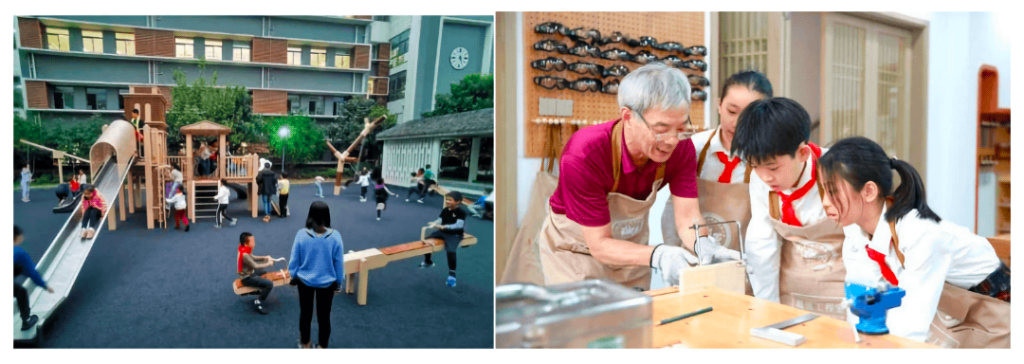
First, educational research and practice within schools focus on the holistic development of children. The child-friendly philosophy emphasizes respecting children’s rights and needs, supporting their physical and mental health, cognitive development, emotional growth, and social adaptability. In practice, educators design a diverse array of curricula and activities aimed at fostering children’s development across moral, intellectual, physical, aesthetic, and practical skills, cultivating their creativity and critical thinking abilities. For example, Wuxi Normal University Affiliated Primary School has integrated principles of physics into outdoor play equipment and activities and introduced practical engineering courses.
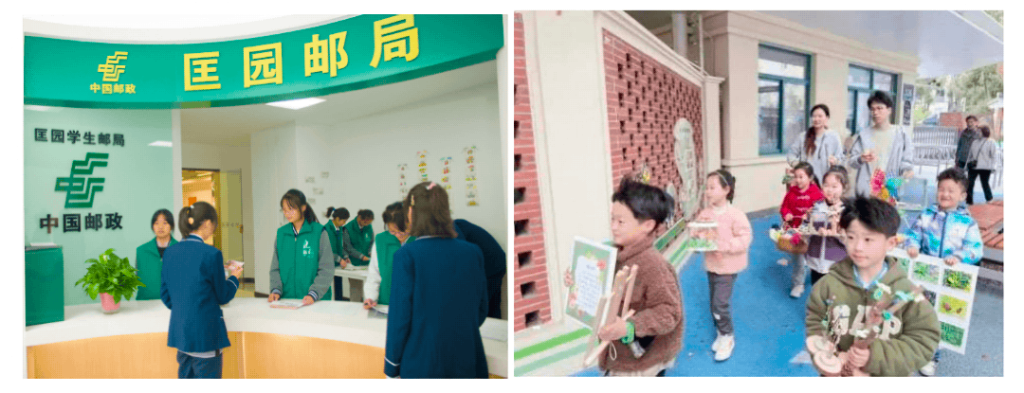
Second, educational research and practice in schools stress the importance of child participation and self-directed development. The child-friendly philosophy advocates for including children in decision-making and activities that affect them, thereby fostering their initiative and creativity. Within the school environment, educators organize various activities such as class projects, clubs, and volunteer programs to encourage active participation, enhancing teamwork and social responsibility skills. For instance, Jiangsu Xishan Senior High School’s “Kuangyuan Community” has established a campus post office, bank, and radio station, enabling students to engage in vocational experiences that help them explore their identities, understand society, solve problems, and build a sense of responsibility. Additionally, educators emphasize fostering children’s autonomous learning abilities, guiding them to think independently and solve problems on their own. For example, the Wuxi Women’s Federation has pioneered having children independently collect and distribute newspapers and magazines to various classrooms, allowing preschoolers to confront failures, strategize, and resolve issues through tasks considered challenging by some adults, ultimately enhancing their resilience and problem-solving abilities. In recent years, child-friendly pathways have been developed to encourage children to commute to and from school independently.
Moreover, educational research and practice within schools are dedicated to cultivating a safe, harmonious, and inclusive campus environment. The child-friendly philosophy calls for providing children with an environment that is secure, healthy, and conducive to their growth and development. In practice, schools implement safety protocols tailored to children of different age groups, ensuring personal safety, fostering a positive and uplifting campus culture, and addressing mental health needs by providing psychological counseling and support. Furthermore, schools advocate for inclusive and respectful values, ensuring that every child feels a sense of belonging and dignity.
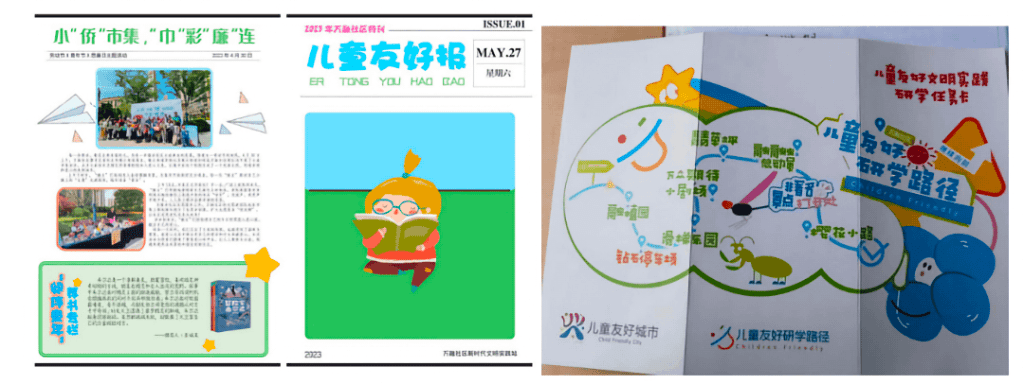
Finally, successful educational research and practice within schools require close collaboration with families and communities. The realization of the child-friendly philosophy necessitates the active involvement of all societal actors. Schools work closely with families to jointly support children’s growth and development and establish partnerships with communities to leverage their resources for enriching educational experiences. For instance, Wanjung Community in Liangxi District, recognized as one of Wuxi’s exemplary child-friendly communities, collaborates with two local kindergartens to transform the community into a large educational space. Through innovative initiatives such as creating a community child-friendly newspaper and establishing child-friendly learning routes, the community space becomes an extracurricular environment for kindergarten children. Simultaneously, schools actively participate in community development, contributing to the building of a child-friendly community.
During this time, I gradually conceived a concept known as the “Campus Wall Revolution.”
In a narrow sense, the Campus Wall Revolution focuses on transforming the school perimeter and surrounding spaces to create connected routes between home, school, and community. It aims to build high-quality pathways for safe school commutes and well-designed parent waiting areas, thereby fostering a demonstration space for collaborative education among families, schools, and communities. More broadly, the Campus Wall Revolution seeks to extend the child-friendly theories and practices developed within school grounds to the broader urban environment, turning public city spaces into informal areas for education and play, thereby significantly expanding the learning spaces available to children beyond the school’s boundaries.
In my vision, a truly child-friendly city is one where school walls appear to exist but effectively dissolve; the nurturing spaces and care for children within the campus extend seamlessly into every part of the city. For example, the pilot section of the child-friendly demonstration street in Chong’ansi Subdistrict, Wuxi, includes the development of a “learning trail” around Lianyuan Street Primary School. The backstreets and alleys near the school have been transformed into a connected network of safe school routes that integrate both commuting and experiential learning, creating vibrant streets. This space includes a “Little Planners” graffiti wall, interactive play features like a ball-rolling wall, and lively bulletin boards like “I am a Lianyuan Student,” which collectively transform the previously mundane parent waiting area into an engaging, shared play space for children and parents. The waiting area becomes a child-friendly zone for parent-child interaction, embodying the concept of “Nurturing through Environment,” while still maintaining its functional purpose. Teachers sometimes hold classes along this extended learning trail, allowing it to serve as a “second classroom” for students. Additionally, the formerly unused assets of the adjacent Lianyuan Street Community have been repurposed into a child-friendly safety education and training center. Incorporating high-tech, smart, and child-friendly elements, this center includes sections for public safety education, comprehensive rescue training, home safety experiences, and multimedia interactions, thereby integrating educational, training, outreach, and experiential functions.
Drawing from the practical work of recent years on child-friendly urban space projects and guided by the five key domains set forth in the National Development and Reform Commission’s “Guiding Opinions,” my team and I have developed a comprehensive concept called “Nurturing through Environment” and a construction strategy focused on building “Five Spaces for Holistic Development.” This represents a child-friendly approach that is uniquely pioneered in Wuxi.
“Nurturing through Environment” redefines the standards of urban construction, positioning child-friendliness as both the baseline requirement and the ultimate goal. By focusing on rational and balanced urban functionality and creating safe, comfortable spaces, we aim to meet the needs of children, who are the most vulnerable group, as the foundational standard. However, when urban spaces are designed to also nurture and educate, their significance is elevated to a higher level. Under the overarching philosophy of “Nurturing through Environment,” the creation of child-friendly spaces is centered around the developmental characteristics of children at various ages, focusing on three key dimensions: sensory development, aesthetic cultivation, and spiritual guidance.
Sensory development is fundamental for children to perceive and understand the world.
Sensory training is particularly crucial for children aged 0 to 6. Therefore, in designing spaces geared toward young children, we emphasize enhancing sensory development through interactive design elements and the physical properties of spaces and facilities. For instance, in color selection, our principle is to use a palette that is rich yet soft, close to natural tones. Environments with colors that are not overly bright but have clear contrasts help protect children’s vision while enhancing their focus. Gentle, natural colors contribute to a sense of comfort and safety, reducing feelings of anxiety or overstimulation. In terms of material choice, while prioritizing safety and environmental protection, we incorporate a variety of natural materials—such as sand, grass, bark, and rainwater. These materials not only enhance the sensory experience but also help children engage with nature, mitigating the physical and psychological effects of nature-deficit disorder.
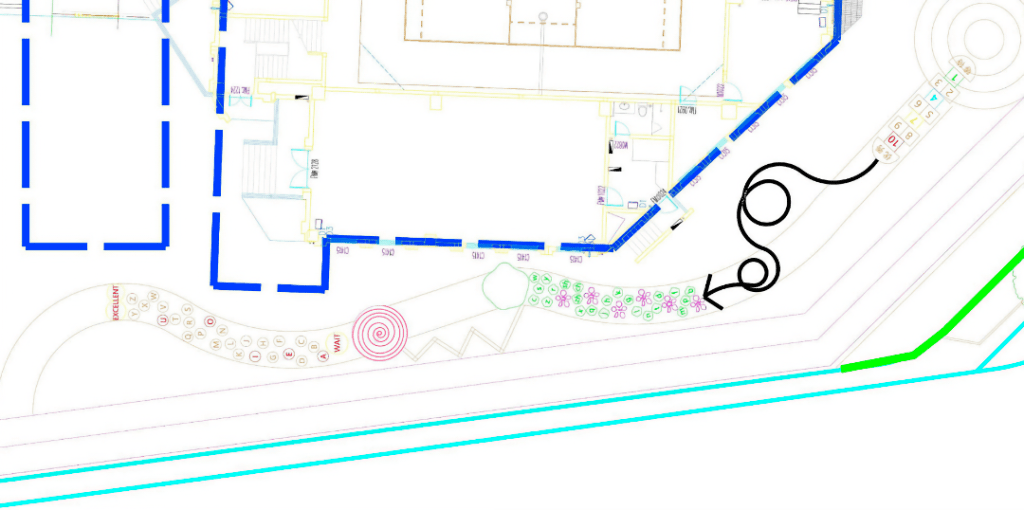
In the design of child-friendly pathways, we have introduced an innovative concept called “sensory integration pathways.” This approach aims to support the development of children’s sensory integration through thoughtful spatial design. Sensory integration is the process by which different sensory pathways—vision, hearing, taste, smell, touch, vestibular sense, and proprioception—gather information from the environment and transmit it to the brain. The brain then processes this multi-channel input by interpreting, comparing, enhancing, inhibiting, and unifying the information, resulting in adaptive responses. Children with well-developed sensory integration demonstrate stronger self-control and deeper learning capabilities. Educational scholars argue that while IQ determines the speed of learning, the capacity for deep learning is what ultimately determines the quality of learning.
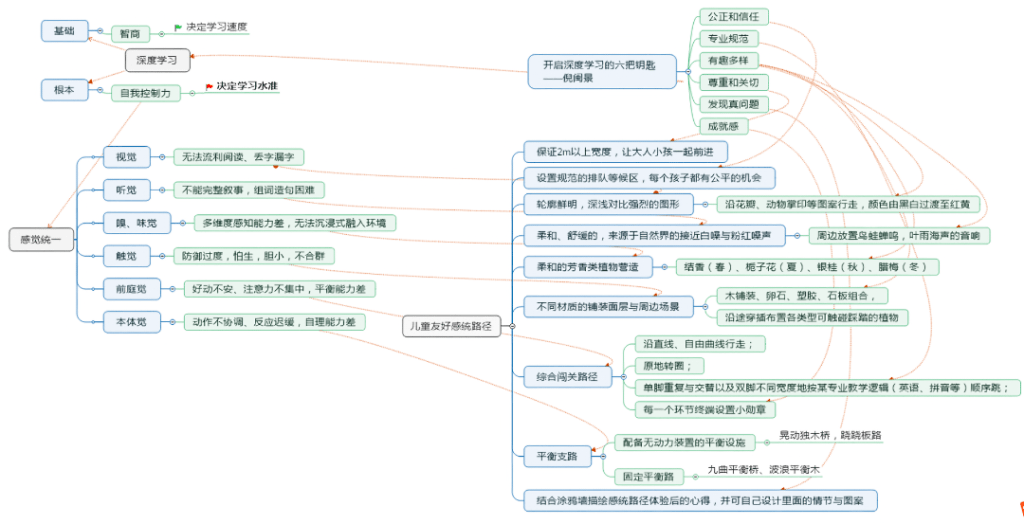
In designing sensory integration pathways, we take into account several dimensions aligned with the different sensory channels.
First, we ensure that the pathway is at least 2 meters wide and set up a game waiting area at the starting point. This allows children and their parents or peers to begin activities together in an orderly way, establishing a positive emotional context for sensory integration training—fostering values of fairness, trust, respect, and care.
Second, we utilize clear, high-contrast patterns. The design of the pathways and facilities transitions from black and white lines to elements in red and yellow, such as petals, animal footprints, and geometric shapes, which gradually attract and hold children’s attention. This design enhances children’s visual perception and concentration, helping to mitigate issues like difficulty with fluent reading or skipping words.
Third, we introduce soft and soothing natural white and pink noise. Using audio systems to play environmental sounds like birds chirping, frogs croaking, cicadas buzzing, rustling leaves, rain, and ocean waves helps improve children’s auditory development. These natural soundscapes can assist in reducing difficulties that some children have with storytelling, vocabulary building, and sentence formation.
Fourth, we incorporate aromatic plants with mild fragrances. By planting gardenia, osmanthus, wintersweet, and other aromatic species, we stimulate the development of children’s olfactory and gustatory senses. This helps improve multidimensional sensory perception and allows children to better immerse themselves in their surroundings.
Fifth, we create diverse ground textures. By incorporating activity areas with surfaces made from a range of materials—such as wood, sand, rubber, stone slabs, and grass—we effectively stimulate children’s tactile perception. These varied textures help alleviate issues like over-defensiveness, shyness, and difficulties in social interaction.
Sixth, we introduce balance-enhancing play structures. Equipment like balance beams, seesaws, and wavy planks are used to train children’s vestibular system, improving their balance and helping to address issues like hyperactivity, poor focus, and weak balance control.
Seventh, we design integrated obstacle course play pathways. These pathways feature activities such as hopscotch, varied movement routes, and obstacle-crossing challenges to train children’s proprioception, improving coordination, reaction times, and self-care abilities.
Other sensory development spaces focus on fostering exploration and play through thoughtful spatial layouts and facility design. For example, play equipment of varying heights is installed to cater to the needs of different age groups, while interactive elements like climbing frames and slides are provided to enhance physical coordination and motor skills.
Aesthetic nurturing is crucial for cultivating children’s appreciation of beauty and their creativity.
For children aged 6-12, aesthetic nurturing has a profound and multifaceted impact. At this stage, they are at a critical juncture in their physical and mental development, during which their cognitive abilities, emotional expression, creativity, and moral values are gradually taking shape. Aesthetic nurturing effectively promotes their overall growth.
First, aesthetic nurturing enhances children’s ability to appreciate beauty and fosters creativity. Through exposure to high-quality art, music, literature, and other cultural works, children learn to perceive, appreciate, and discover beauty. They are encouraged to express this sense of beauty through creative outlets such as drawing, crafts, and performance. This pursuit and expression of beauty not only inspire creativity but also develop imagination and communication skills.
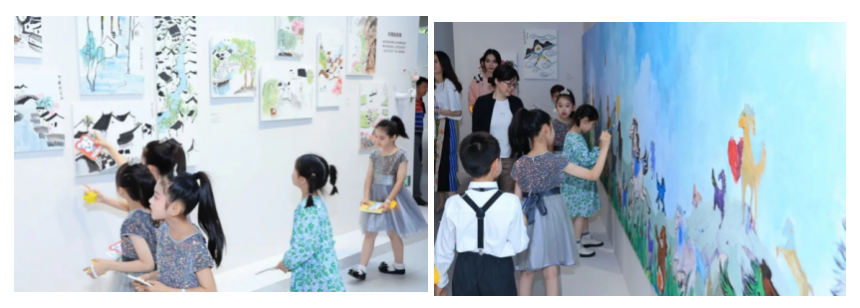
Second, aesthetic nurturing helps cultivate emotional awareness and empathy in children. Art often conveys complex emotions, and by engaging with these works, children gain deeper insights into human feelings and learn to express, share, and understand the emotions of others. Developing emotional literacy and empathy is essential for social skills and building relationships. For example, Wuxi Urban Investment transformed a former warehouse into the Beihong Art Lounge within its Canal Art Park, part of the “First Batch of Most Beautiful Child-Friendly Parks in Wuxi.” On June 22, 2024, the Beihong Art Lounge hosted the opening of the “Hello, Shining Child” public art exhibition, which lasted for 10 days and featured works from children at Wuxi Rainbow Bridge Kindergarten, Wuxi Special Education School, and other institutions. The event was attended by city leaders, representatives from the Wuxi Women’s Federation, and the Disabled Persons’ Federation. The exhibition aimed to spread awareness of the importance of supporting children’s growth, encourage greater social investment in children’s education, and provide children with opportunities to showcase their talents and pursue their dreams, all while reinforcing the city’s child-friendly principles.
In addition, aesthetic nurturing can positively influence children’s moral development. By engaging with art that carries moral themes, children can intuitively understand concepts of what is true, good, and beautiful, as opposed to what is false, evil, and ugly. This exposure helps to shape their moral emotions and judgment, laying a strong foundation for their future character development. Furthermore, aesthetic nurturing provides emotional comfort and nourishment. In today’s fast-paced society, children face various pressures and challenges. Aesthetic activities allow them to find solace and comfort in the world of art, helping to relieve stress and improve their overall quality of life.
In developing child-friendly spaces, we place significant emphasis on aesthetic appeal and cultural richness.
Firstly, we aim to provide children with diverse art resources and opportunities to participate in artistic activities, encouraging healthy growth through both the appreciation and creation of beauty. For instance, in the Chong’ansi Subdistrict Child-Friendly Demonstration Street project, we incorporated the “Childhood Dreams” Little Planners’ Studio into the design of the Lianyuan Street learning pathway network. This studio showcases original artwork from Lianyuan Street Primary School students who contributed to the learning pathway’s design, and outdoor graffiti boards were installed where children can periodically express their visions of child-friendly pathways during outdoor learning activities.
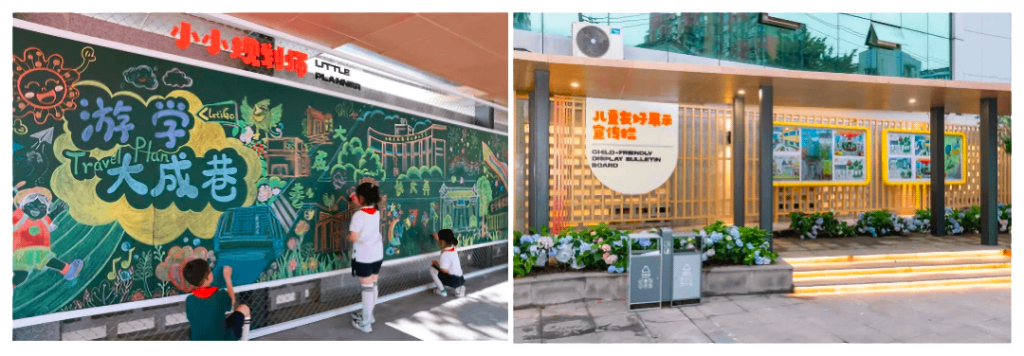
Second, the integration of artistic elements. By incorporating art forms such as painting, sculpture, and installation art into space design, we embed artistic features throughout the environment. These artworks not only enhance the visual appeal of spaces but also stimulate children’s imagination and creativity.
Third, the inclusion of cultural heritage and displays. By embedding local cultural elements into space design, children can engage with and appreciate the richness of traditional culture while playing. Additionally, setting up areas to display children’s works—whether cultural products or creative pieces—helps to foster their cultural confidence and inspire creativity. For example, the Canal Art Park, part of the city’s first series of “Most Beautiful Child-Friendly Parks,” invited outstanding artists from across the country to create 16 uniquely themed sculptures. The Beihong Art Lounge within the park also hosts regular cultural and art exhibitions tailored to children of all ages, providing opportunities for them to explore and connect with diverse artistic experiences.
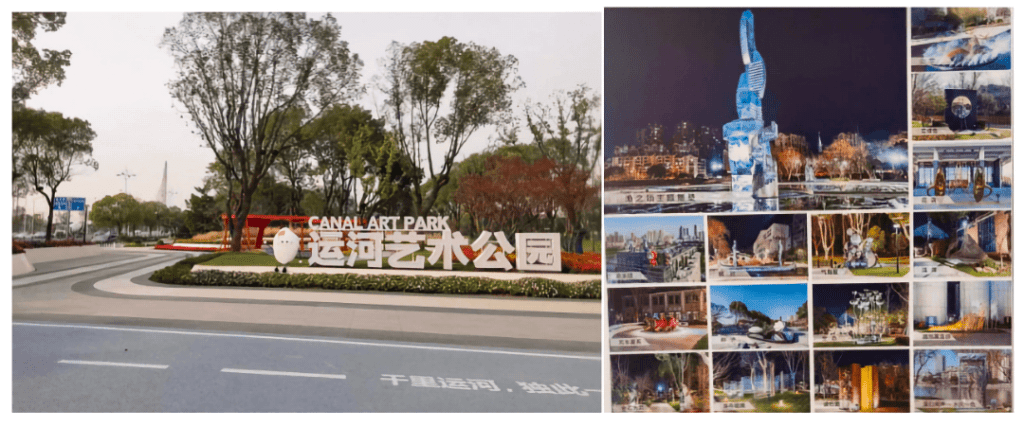
Spiritual guidance has a profound and lasting impact on children aged 12-18.
During this stage of adolescence, children undergo significant physiological and psychological changes. Their capacity for independent thinking and self-awareness grows, and this period is critical for shaping their values, life outlook, and worldview.
Firstly, spiritual guidance plays a key role in positively shaping children’s values. Through appropriate guidance, children can develop positive values such as integrity, courage, respect, and responsibility. These core values become guiding principles in their lives, helping them make sound decisions and navigate their future paths.
Secondly, spiritual guidance enhances children’s self-confidence and self-esteem. Adolescents face various challenges—physical, psychological, and social. Proper guidance helps them develop a positive self-concept, recognizing their strengths and addressing their weaknesses, which in turn bolsters their confidence and self-respect, better equipping them to face and overcome life’s challenges.
Additionally, spiritual guidance strengthens children’s moral character and social responsibility. Encouraging them to engage with social issues and participate in community service fosters empathy and a strong sense of social responsibility, nurturing concern for others and society as a whole. For example, in child-friendly spaces, we integrate local cultural elements to create a strong sense of place and meaning. One such example is the enhancement project on the Dushan Dam and Wuli Lake Sluice Bridge on Bo Gong Island in Wuxi, where we included water-themed educational elements rooted in child-friendly concepts. Drawing on the ancient story of Zhang Bo’s efforts to control flooding in Wuxi, these features convey the spirit of the Jiangnan people, who have long faced adversity, mitigated risks, and demonstrated selflessness, thus passing on these values to children.
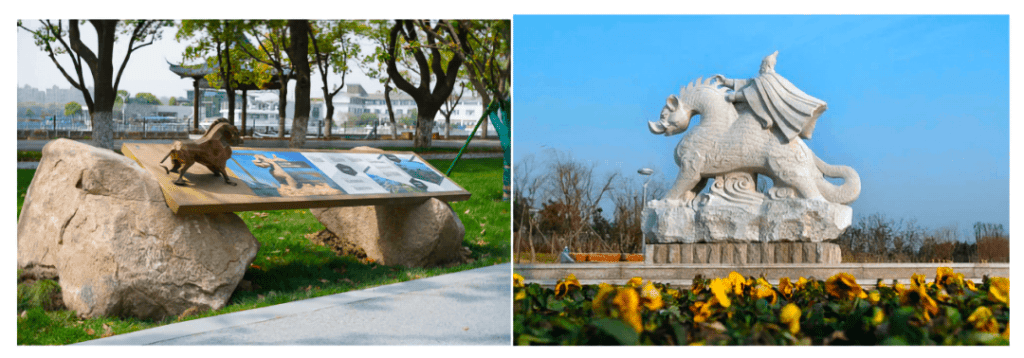
Proper spiritual guidance not only focuses on children’s academic performance but also places greater emphasis on developing their psychological well-being, social skills, and creativity. This approach fosters holistic development, providing a solid foundation for their future life and work. Consequently, spiritual guidance serves as a higher-level objective in designing child-friendly spaces, particularly those tailored for children aged 12-18. Such spaces should emphasize spiritual development, using appropriate guidance and educational experiences to help children build healthy personalities and values, thereby laying a solid foundation for their future growth.
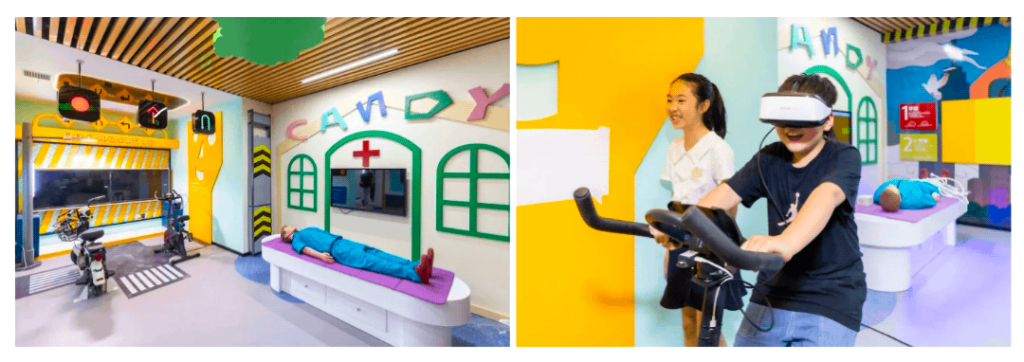
Firstly, we adopt a “learning through play” design philosophy. By embedding educational games and activities into the environment, we guide children to learn social norms and moral principles naturally through play. For instance, facilities can simulate real-world scenarios where children can engage in role-playing to experience and learn how to interact, share, and cooperate with others. A practical example is the child-friendly campus traffic safety area we developed for the Wuxi Women’s Federation childcare program. In this environment, children take on roles such as vehicle drivers, bus operators, traffic police officers, and pedestrians. This hands-on approach not only teaches them traffic regulations but also cultivates an awareness of rules and nurtures a humanistic spirit of care and respect for vulnerable groups.
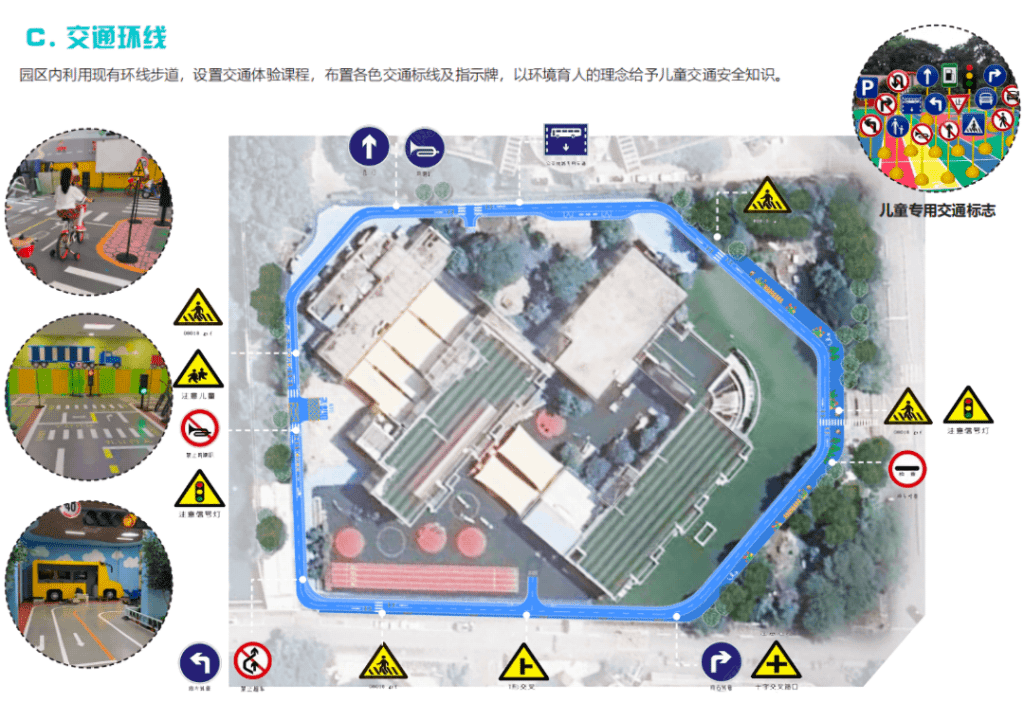
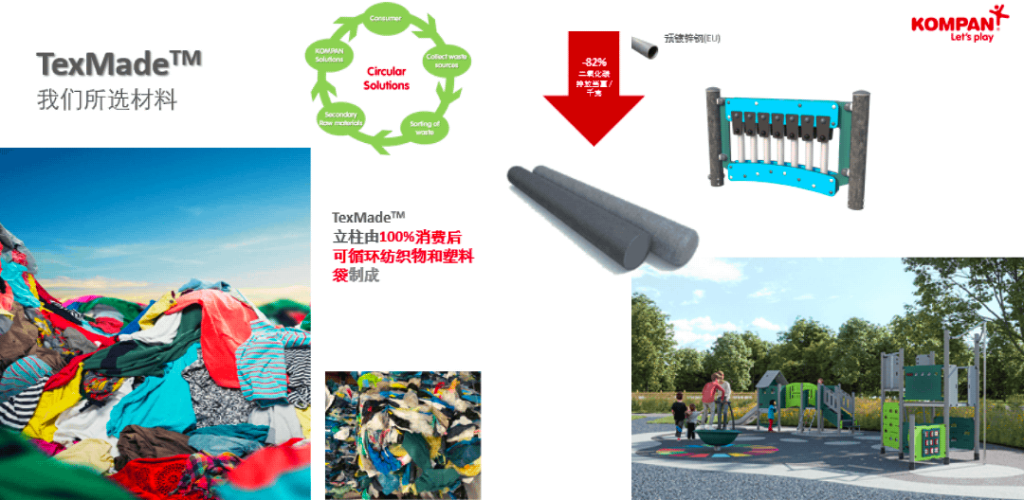
Secondly, we focus on integrating environmental protection and sustainable development concepts into our space creation efforts. This includes the use of green building materials and energy-efficient equipment to raise children’s awareness of environmental issues and sustainability. We also implement waste sorting and recycling facilities to instill environmentally friendly habits in children. For instance, in collaboration with KOMPAN, a global leader in non-motorized playground equipment, we promote the use of recycled materials, such as old fishing nets, fabrics, and plastics, along with acacia wood, to construct low-carbon play facilities. Through their interaction with these eco-friendly materials, children gradually develop a deeper awareness of nature conservation and the importance of protecting the environment.
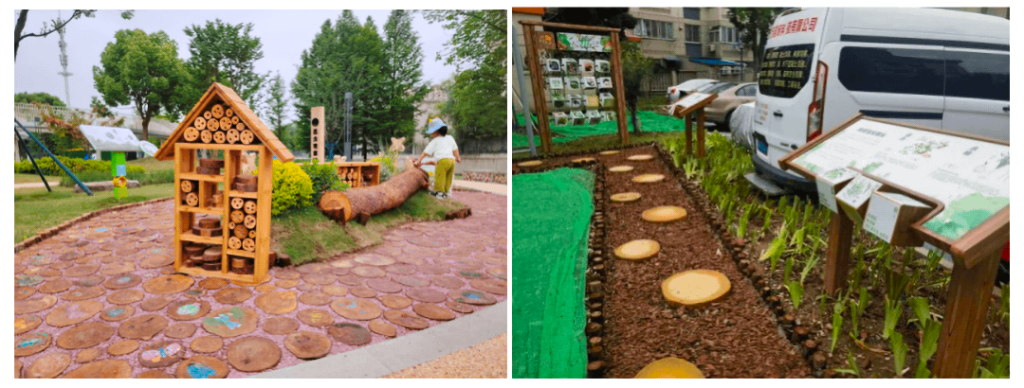
Thirdly, we focus on enhancing psychological resilience by creating interactive children’s activity spaces within natural environments. This approach stimulates the parasympathetic nervous system, promoting a more comfortable and relaxed emotional state. For instance, in several child-friendly renovation projects in Wuxi, we have introduced interactive elements like the “Insect Hotel” and “One-Meter Vegetable Garden.” The “Insect Hotel” features loose wooden materials, grassy areas, and tree stumps to establish habitats for insects, allowing children to engage closely with nature. Younger children can observe insects, while older children can build their own natural camps. The “One-Meter Vegetable Garden” converts underutilized green spaces in communities, parks, and schools into vegetable plots where children can actively participate in gardening. This hands-on experience with soil, insects, and plants aids in their recovery from mental fatigue, fostering both resilience and a deeper connection to the natural world.
In conclusion, the “environmental education” framework for creating child-friendly spaces must focus on three levels: perceptual development, aesthetic cultivation, and spiritual guidance. By crafting environments that are creative, visually appealing, and culturally rich, we can foster the comprehensive growth of children and nurture their overall qualities and sense of social responsibility.
3 Practice
The establishment of child-friendly cities is a significant initiative to implement the decisions and directives of the Party Central Committee and the State Council. Since the 18th National Congress of the Communist Party, the Central Committee, led by Comrade Xi Jinping, has prioritized the development of youth and children as a strategic task. This emphasis recognizes contemporary Chinese youth and children as not only participants and witnesses to achieving the first centenary goal but also as essential contributors to realizing the second centenary goal and building a modern socialist nation. Accordingly, the state has formally included the construction of child-friendly cities as a key project.
Creating child-friendly urban environments aims to provide better conditions and settings for children’s growth and development, thereby fostering a shared commitment to child-friendliness as a societal norm. This mission falls to all levels of government and society at large, ensuring the cultivation of a new generation equipped to undertake the responsibilities of national rejuvenation.
Following the notification of the pilot program, Wuxi City promptly commenced its application efforts. My organization, Huaxin Design Group, operates under the mission of “making cities better.” By leveraging our comprehensive capabilities in urban construction, we have actively embraced our responsibilities as a state-owned enterprise. Our quick response has allowed us to effectively serve as a think tank for the city’s initiative to create a child-friendly urban environment. This dedication contributed to Wuxi being selected in April 2023 as one of the first child-friendly cities in Jiangsu Province and the second nationally.
(1) Fulfilling the Think Tank Role and Planning Top-Level Design
Since Wuxi City began its efforts to establish a child-friendly city pilot in response to national directives, my team and I have collaborated closely with the Women’s Federation, the Development and Reform Commission, and the Women’s and Children’s Working Committee, actively participating in the national application process. In June 2021, the Wuxi Women’s Federation, alongside the Wuxi Survey and Design Association and the Wuxi Civil Engineering Society, designated Huaxin Design Group as the “Wuxi Child-Friendly Space Research Center” (hereafter referred to as the Center), marking the first initiative of its kind at the municipal level in the country.
Since the Center’s establishment, we have mobilized experts from landscape, traffic, architecture, and environmental fields to engage in various planning and standard-setting initiatives. We collaborated with the Shanghai Consulting Group to develop the “Strategic Plan for Promoting Child-Friendly City Construction in Wuxi (2022-2035).” Additionally, we initiated a key R&D project on the “Guideline System and Monitoring Evaluation Mechanism for Child-Friendly City Construction in Wuxi.” We produced the “Guidelines for Child-Friendly Park Construction in Wuxi,” which we submitted for provincial approval alongside the Municipal Urban Landscape Bureau, and created the “Guidelines for Child-Friendly Community Construction” to guide the renovation of older neighborhoods amid urban renewal efforts. In 2022, I presented on child-friendly urban renewal concepts at the “Gathering Wisdom for Wuxi” Urban Renewal Forum. To date, two key construction guidelines have been submitted to the Provincial Development and Reform Commission as essential technical support documents for our city’s national pilot bid.
By December 2023, we completed top-level designs, including the “Strategic Plan for Promoting Child-Friendly City Construction in Wuxi (2022-2035)” and the “Guideline System and Monitoring Evaluation Mechanism for Child-Friendly City Construction in Wuxi.” We have also finalized guidelines for child-friendly parks, communities, and parents’ waiting areas, with additional guidelines for extracurricular activity venues, learning pathways, and reading spaces set to be released in 2024.
To ensure a robust framework for advancing child-friendly city construction in Wuxi, the Center compiled the “Application Handbook for the First Batch of National Child-Friendly City Construction Pilot Projects” and contributed to key policy documents such as the “Implementation Plan for Building a Child-Friendly City in Wuxi” (Document No. Xifagai She [2022] No. 8), “Key Points for Building a Child-Friendly City in Wuxi in 2022” (Document No. Xifagai Shehui [2022] No. 59), and “Key Points for Building a Child-Friendly City in Wuxi in 2023” (Document No. Xifagai Shehui [2023] No. 2), as well as the 2023 list of key child-friendly projects (Document No. Xifagai Shehui [2023] No. 1).
(2) Emphasizing Project Support to Transform “Blueprints” into “Realities”
Since initiating the pilot project for establishing a national child-friendly city, Wuxi has relied on concrete projects to provide strong support for its development. The Center has actively collaborated with the Women’s Federation, the Development and Reform Commission, and the Women’s and Children’s Working Committee to plan initiatives, with early successes already visible. Since 2021, the Center has delivered technical support for 62 child-friendly communities, 28 child-friendly parks, and 10 child-friendly learning pathways included in annual government initiatives aimed at public benefit.
Key projects include the planning and design of the child-friendly demonstration community in the Daoxiang redevelopment area, the Jingkai and Mei child-friendly kindergarten, the Huilian child-friendly environmental science base, the Dandelion Creative Town along the Taiqing section of Wuxi Metro Line 1, the Bailian Outlets child-friendly commercial complex, Beijian child-friendly park, and the Yucai Road learning pathway in Qianqiao. We have also planned the “Chong’an Temple Street Child-Friendly Demonstration Block” and the “Changjing Town Child-Friendly Demonstration Town” projects, aiming to secure central budgetary subsidies for child-friendly cities in 2024. Both projects distinguished themselves among four pilot cities during the Jiangsu Provincial Development and Reform Commission’s project evaluation meeting, earning unanimous praise from leaders and experts.
(3) Strengthening Promotion and Guidance to Foster a Citywide Consensus on Child-Friendliness
The Center collaborates actively with the Women’s and Children’s Working Committee and the Women’s Federation to create platforms for children’s participation in Wuxi, including guiding the establishment of the Wuxi Little Planners Studio and various children’s observation groups. To promote Wuxi as a child-friendly city, the Center designed the city’s child-friendly logo, unveiled by Mayor Zhao Jianjun on Children’s Day. Furthermore, it has published the “Wuxi Child-Friendly City Album” for two consecutive years.
The Center has also conducted lectures on child-friendly city space construction at diverse events, such as the Wuxi Broadcasting 1069 Salon, the UNICEF City Illumination Project, and local media programs like Jiangyin’s Little Mayor initiative. Additionally, it has participated in the Urban Development Group’s City Construction Forum. The Center has garnered attention from mainstream media, receiving multiple requests for articles from Xinhua Daily, Wuxi Daily, and Wuxi Bo News.
(4) Supporting Children’s Participation and Creating Experience Bases for Children
The Huaxin Design Group is committed to ensuring children’s rights to participate, utilizing its office resources to create a platform for involvement. In partnership with the Wuxi Women and Children Development Activity Center, the group hosts “Little Planner Experience Days.” This program allows child representatives from around the city to engage in immersive learning and observation at the design institute, enabling them to appreciate the technical and creative aspects of urban planning. This initiative fosters engineering thinking that balances systematic planning, collaboration, and safety, inspiring aspirations for future careers in urban development.
Notably, in 2023, during the renovation of the Dacheng Lane Child-Friendly Historical and Cultural Commercial District, the Huaxin Design Group engaged primarily Lianyuan Street Primary School students in the project. The design process yielded nearly 10,000 contributions from children, bringing their ideas to life and exemplifying the core principle of child-friendly urban development: viewing the city from a “one-meter height,” which emphasizes the importance of children’s participation.
(5) Fulfilling State-Owned Enterprise Responsibilities in Collaborative Education among Home, School, and Community
The Huaxin Design Group actively engages in the “Home-School-Community Collaborative Education Alliance,” initiated by the Binhu District Education Bureau and Shuixiu Experimental Golden Jiangnan Kindergarten. Leveraging its expertise as a state-owned design institute, the group facilitates the creation of a collaborative network that enhances educational effectiveness among schools, families, and society. This initiative aims to share quality educational resources and foster a unified effort to create a harmonious, efficient, and high-quality learning environment.
As a representative of the alliance, Huaxin Design Group integrates its strengths into collaborative education and support for disadvantaged children. The group has long supported children in need at the municipal School for the Deaf and Liyuan Central Primary School by connecting relevant resources through its party-building platform and making various extracurricular activity venues accessible to them. Guided by the vision of “We Make the City Better,” Huaxin Design Group is committed to building a happy and beautiful city for the next generation as part of its core mission. The group will continue to strengthen collaborative education awareness and actively establish a new framework for cooperation among schools, families, and society, focusing on cultivating well-rounded builders and successors of socialism.
4 Exploration
Currently, I am actively pursuing the implementation of child-friendly city projects in various sectors of urban renewal, including communities, parks, scenic areas, and transportation hubs, in collaboration with the municipal Development and Reform Commission, Housing and Urban-Rural Development, Women’s Federation, and the Women and Children’s Work Committee.
In the renovation of old residential areas, we are transforming the centralized parking lot in the Daoxiang area into a designated play space. We plan to temporarily close the parking lot on weekdays from 10 a.m. to 4 p.m. and for part of a weekend day, allowing primarily children and elderly residents to engage in activities. This suspension of parking significantly reduces vehicle traffic in the community, enabling children to run freely in a safe environment, reminiscent of the warm spaces from our childhood. We also aim to use community fire stations and recycling points to create educational spaces for fire safety and environmental awareness, thereby promoting moral education. By incorporating sensory integration principles, we will transform a simple pedestrian pathway into a sensory path that enhances children’s learning capabilities, creating an intellectual education space. Additionally, we will cleverly integrate play functions into school and community walls to develop age-appropriate fitness facilities, creating a physical education space. Artists will be invited to create works on street trees, manhole covers, and various urban furniture, resulting in a pervasive aesthetic education space. We will also establish a one-meter garden in some underutilized green spaces, promoting labor education. These thoughtful designs embody the concept of environment fostering education, creating a sense of “shared smiles” throughout our community.
In renewing urban park green spaces, we are actively visiting various wetland parks in collaboration with the Municipal Planning Bureau. Our goal is to integrate the wetland resources accumulated over the years in the Taihu Basin for ecological water management. With the support of various social forces, we plan to establish a Wetland Science Education Alliance and organize summer camps, allowing children to explore, learn, and create mini-habitats in wetlands, helping them understand the value of water resources through play. This also represents a redevelopment of wetland resources that can revitalize wetland operations.
Utilizing opportunities from scenic area renovations, we are collaborating with the Cultural and Tourism Group to create the first batch of child-friendly demonstration scenic spots, leveraging Wuxi’s landscape and classical garden resources. We are currently planning activities such as Taihu boat cuisine making, Hanfu cosplay, Guochao camping, and ancient trail exploration, enabling children to engage with nature while reconnecting with Wuxi’s local culture.
In transportation hubs, we are working with the Metro Group to transform an unused underground passage on Metro Line 1 into a 1-kilometer-long Dandelion Creative Town. This space will feature a child-friendly DNA exhibition hall and a playful metaverse, establishing a demonstration area for child-friendly spaces.
These concrete projects exemplify innovative approaches to urban renewal centered around child-friendliness. Building a child-friendly city goes beyond merely creating playgrounds; it prioritizes children’s needs in the top-level design and policy-making of urban development. Essential considerations include children’s growth needs in overall planning, construction standards, and service systems. Child-friendliness should serve as a benchmark for assessing a city’s high-quality development, with metrics reflecting children’s health, safety, happiness, and well-being—essentially representing the love and warmth of a city.

 CCFU2089