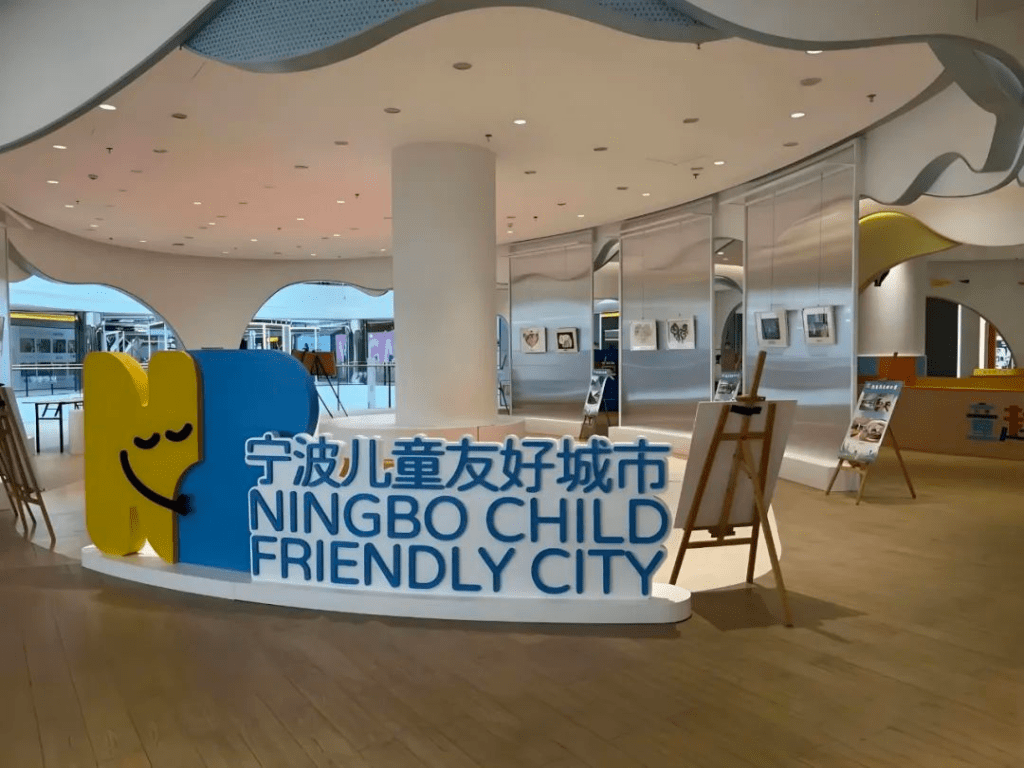
In October 2021, China’s National Development and Reform Commission, along with 22 other departments, issued the “Guiding Opinions on Promoting the Construction of Child-Friendly Cities.” This document set the goal to establish 100 pilot child-friendly cities nationwide by 2025, ensuring that child-friendly requirements are well-reflected in public services, rights protection, growth spaces, development environments, and social policies. By 2035, approximately 100 cities are expected to be officially designated as National Child-Friendly Cities, with child-friendliness becoming a significant marker of high-quality urban development.
The construction of child-friendly cities is a complex, systemic endeavor requiring interdisciplinary, cross-sectoral, and intergenerational collaboration across multiple fields. This necessity for integration is also the core of China’s innovative approach to building child-friendly cities. Taking disciplinary dimensions as an example, past research on child-friendly city development has primarily focused on urban planning, landscape architecture, and child psychology. However, there is now an urgent need for more disciplines to participate and to encourage interdisciplinary collaboration to further enrich the connotations of child-friendly city construction.
From a sociological perspective, building a child-friendly city involves adjusting social structures and power relations, emphasizing children’s right to participate and encouraging them to express their opinions and needs in urban affairs. Human geography, on the other hand, examines the reshaping of relationships between people and the geographic environment throughout this process, calling for urban planning and design that better incorporate the perspectives of children. From an economic standpoint, constructing child-friendly cities is seen as a long-term social investment. While it may increase fiscal spending in the short term, it is beneficial in the long run by enhancing the city’s attractiveness for both population and talent, thereby promoting high-quality urban development.
In this interdisciplinary process, the “people-place-learning” relationship is undergoing profound changes. Traditional urban development has often viewed individuals as passive users, whereas the construction of child-friendly cities emphasizes the active role of children as participants. Geographic spaces are no longer seen merely as physical environments; they encompass multiple attributes, including social, cultural, and educational aspects. Disciplines are evolving from being confined to individual fields to exhibiting trends of interdisciplinary integration and convergence. This transformation not only enriches the theoretical foundation of child-friendly city construction but also provides more comprehensive and pragmatic guidance for practice.
China’s approach to building child-friendly cities embodies an innovative “people-place-learning” relationship. This concept requires a multidisciplinary perspective to reassess urban development, placing children’s needs and rights at the forefront. Such a shift not only benefits the comprehensive development of children but also drives cities toward greater inclusivity and sustainability.
 CCFU2089