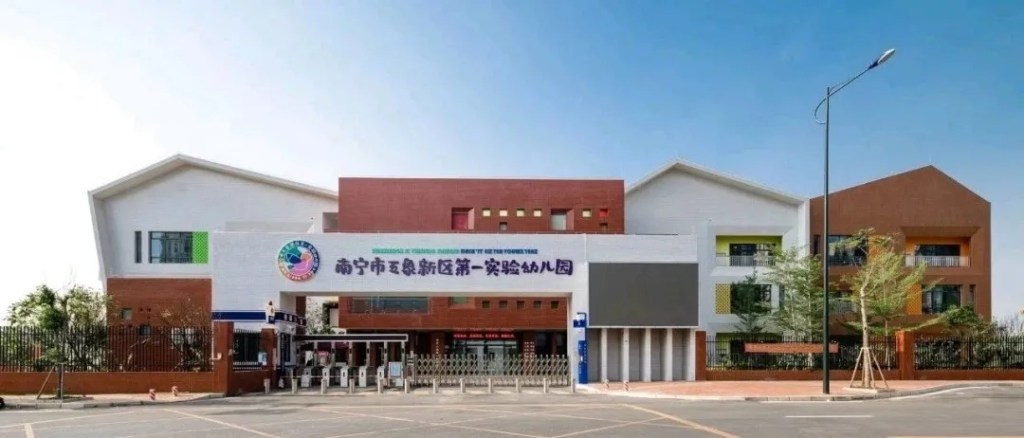
Nanning Wuxiang New District No. 1 Experimental Kindergarten (hereinafter referred to as “Wuxiang No. 1 Kindergarten”) is located in the Nanning Area of the China (Guangxi) Pilot Free Trade Zone, nestled by the beautiful Wuxiang Lake. It is a public kindergarten directly managed by the Nanning Municipal Education Bureau. The kindergarten covers an area of 12,942.66 square meters, with 3,600 square meters dedicated to outdoor activities and 4,530 square meters of green space.
With the philosophy of “Illuminating a Bright Future with Love,” Wuxiang No. 1 Kindergarten integrates the concepts of harmony and beauty found in the cycle of the four seasons into its educational approach. Through fostering a harmonious relationship between people, objects, and the environment, it creates a well-rounded and balanced educational setting. The dedicated staff at Wuxiang No. 1 Kindergarten strive to “sow the seeds of beauty, nurture children with the ‘Four Beauties’ attributes, and build a harmonious and beautiful paradise together.”
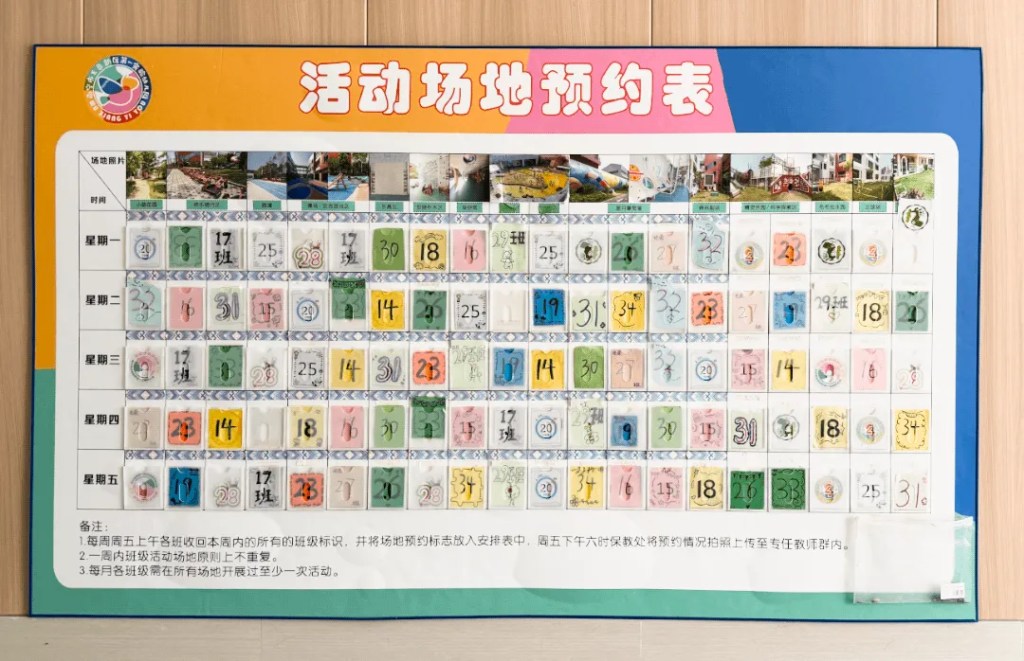
“Every activity area in the kindergarten can be reserved by the children themselves, with the rights to book and use the spaces fully entrusted to them.” This colorful activity reservation chart is a vivid example of Nanning Wuxiang New District No. 1 Experimental Kindergarten (hereinafter referred to as “Wuxiang No. 1 Kindergarten”) exploring the creation of a child-friendly kindergarten.
To address the often-overlooked right to participation in a child’s growth, Wuxiang No. 1 Kindergarten has implemented an innovative approach by shifting from teacher-led arrangements of activity spaces to a system where children take the lead in making reservations. This child-centered reservation system allows administrators to identify management oversights through the children’s booking behaviors, facilitating continuous improvement. It not only grants children the right to participate in managing the kindergarten’s activities, showcasing a “rights-friendly” approach, but also provides them with a unique sense of ceremony.
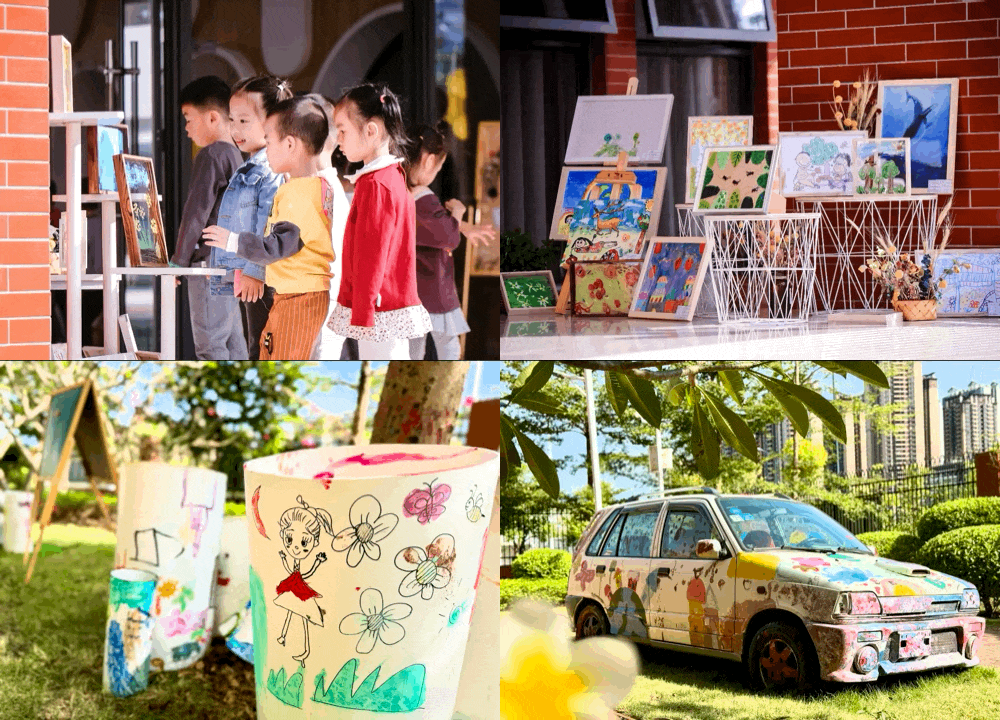
Creating a child-friendly environment conducive to growth is crucial for the joyful development of every child. Transitioning from “concept” to “reality,” Wuxiang No. 1 Kindergarten employs an “open” approach to inspire experiences, making spaces “interactive.” This has left many tangible “traces” of their efforts in building a child-friendly environment.
From Observers to Designers—The Harmonious Camp
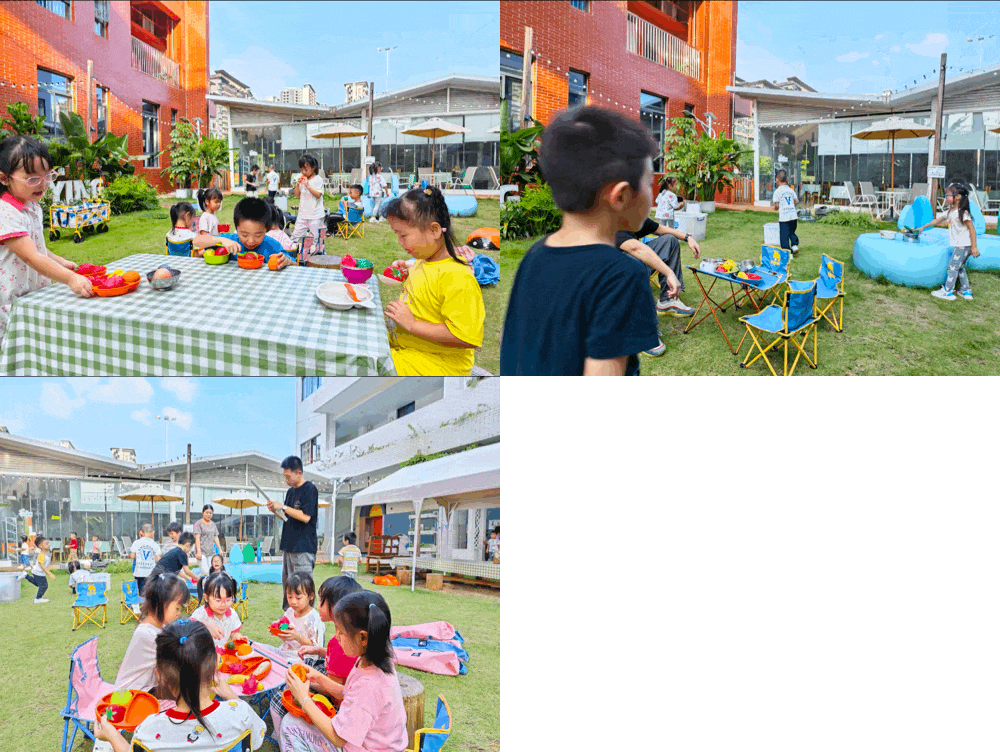
A diverse array of plants, tiered hydroponic setups, and a lush vegetable garden… children gather in the pavilion, sharing the latest happenings around the camp. “We noticed that many children have rich camping experiences, so we thought, why not ‘bring the campsite’ into the kindergarten? That’s how the teachers and children together created this natural, ecological harmonious camp,” says Song Yueling, the principal of Wuxiang No. 1 Kindergarten.
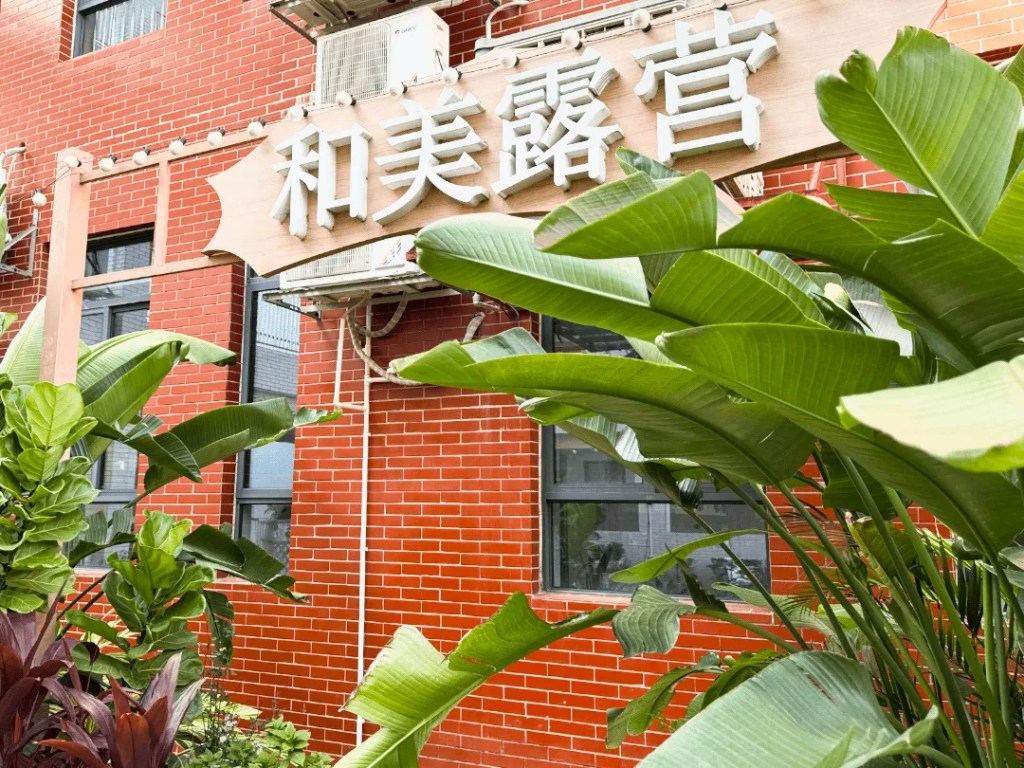
The camp preserves the natural texture of the ground and combines the activities of camping and gardening—balancing work and play. By utilizing both horizontal and vertical spaces, the camp is designed with basic planting zones, a hydroponic experience area, a tall plant zone, an experimental planting zone, as well as areas for hands-on activities and relaxation. Each class or group takes turns managing different sections of the camp and records their management efforts accordingly.
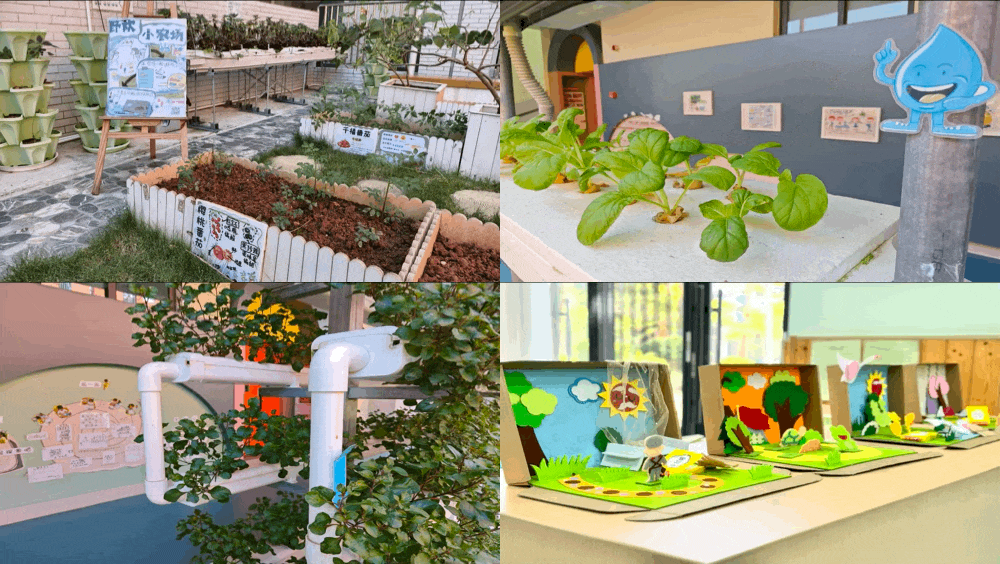
The process from planning the camp to managing it allows children to gradually become independent, autonomous participants. It also represents a journey where children and adults interact and negotiate within the educational process, ultimately achieving self-directed enjoyment and deeper learning.
Becoming Masters of Their Environment—The Fairyland Playground
The Fairyland Playground is a versatile outdoor space designed to create imaginative play scenarios, develop specialized programs, and support children’s growth.
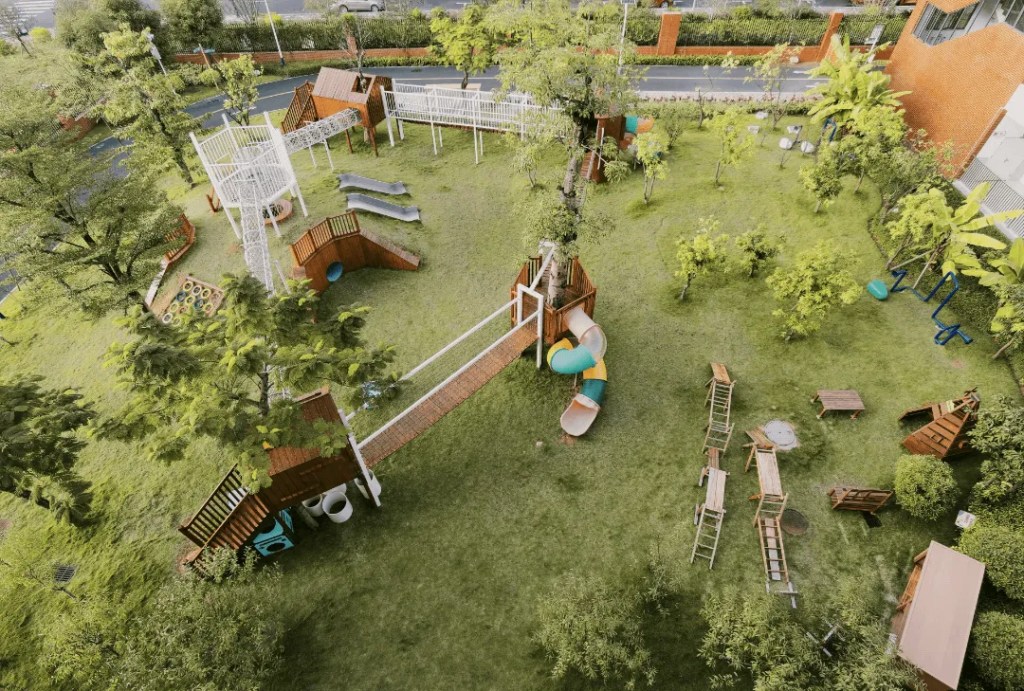
In the Fairyland Playground, various low-structure materials are available for children to manipulate, transform, and combine according to their ideas. Through interactions with the environment and materials, children gain valuable hands-on experiences. Beyond providing opportunities for climbing, crawling, and exploring, the playground also allows play materials to become platforms where children can “reach new heights.” One game, “Throwing the Dynamite Bundle,” was invented by the children themselves: those at higher elevations throw, while those below dodge, adding endless possibilities and creativity to their outdoor play.
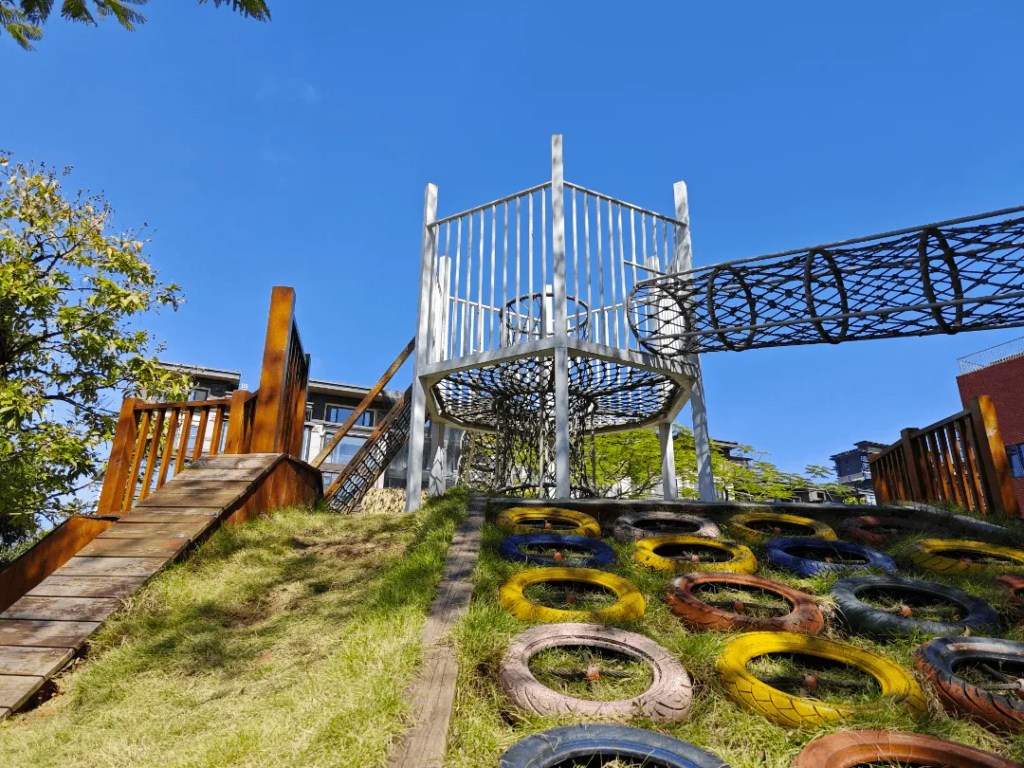
In the original site plan, the Fairyland Playground and the Harmonious Camp were separated by a wall. To address the issue of “static isolation” between these spaces, the principal and teachers adopted a “listen to needs—expand spaces—reintegrate” approach. They reconfigured the rigid play areas, transforming the “fixed spaces” into “open spaces,” where children can move freely between areas and enjoy their playtime with greater flexibility and joy.
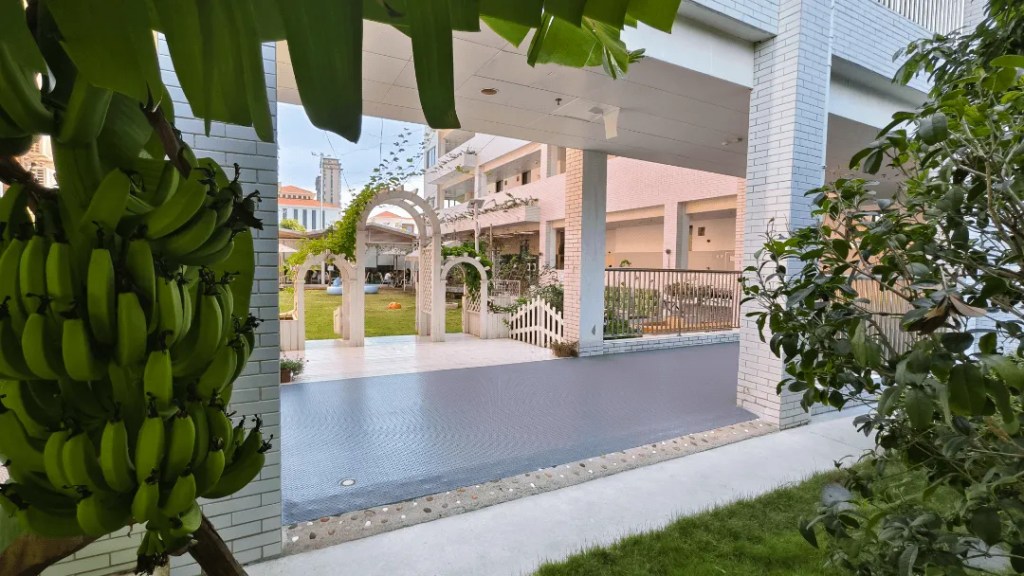
Collaborative Efforts to Cultivate a Foundation of Beauty—The Harmonious Learning Exhibition Hall
Embracing children with open arms, Wuxiang No. 1 Kindergarten integrates their perspectives and encourages their participation. Relying on its own unique context, the kindergarten maintains close collaboration with families and the community, making comprehensive use of various educational resources to create opportunities for children’s development.
Based on children’s interests, preferences, needs, and developmental levels, the kindergarten uses the surrounding natural and social environments as key resources. Through digital media and AR maps, it has developed a “Three-Kilometer” child-friendly lifestyle map, providing resources for class-based experiential learning. This has led to the creation of locally themed study guides like Exploring the Fire Station, Little Bankers, and Spring at Wuxiang Lake, which integrate community resources with social education.
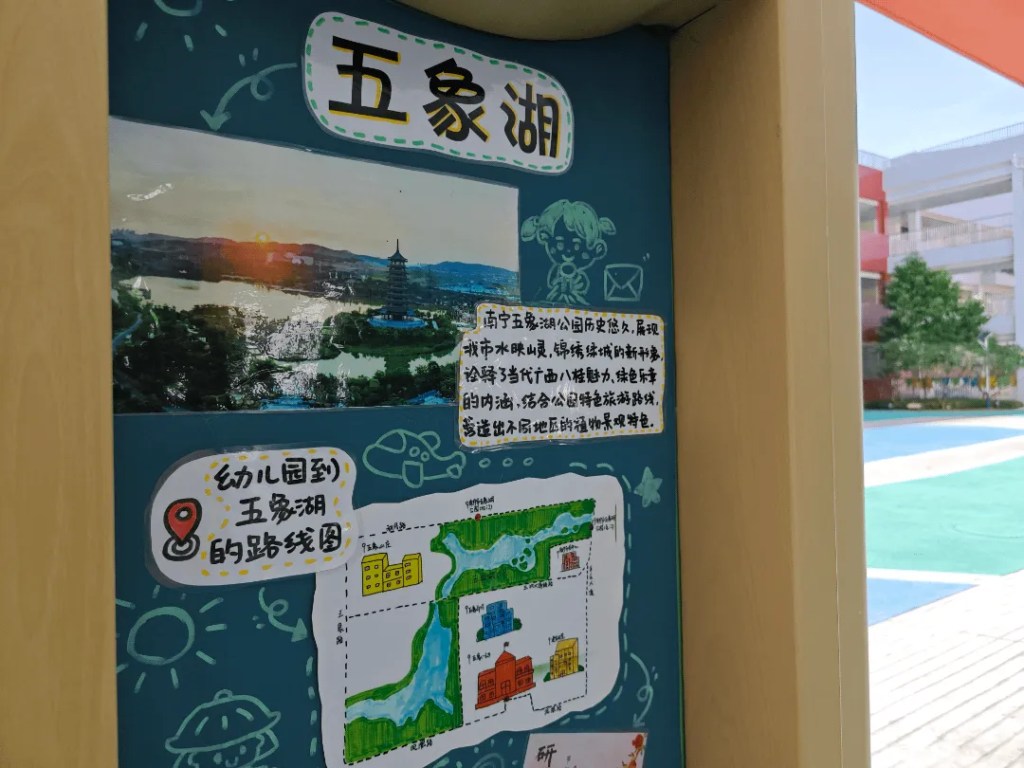
Building on a strong home-kindergarten-community collaboration mechanism, the kindergarten has developed the “Children’s Observation Group” consultation system. This mechanism combines soliciting and guiding children’s input, gathering feedback, and promoting their ideas. After completing unit-based experiential learning activities, children participate in designing themes for the learning exhibition hall. They express their thoughts and ideas through photos, drawings, symbols, and objects, offering a direct view of their perspectives.
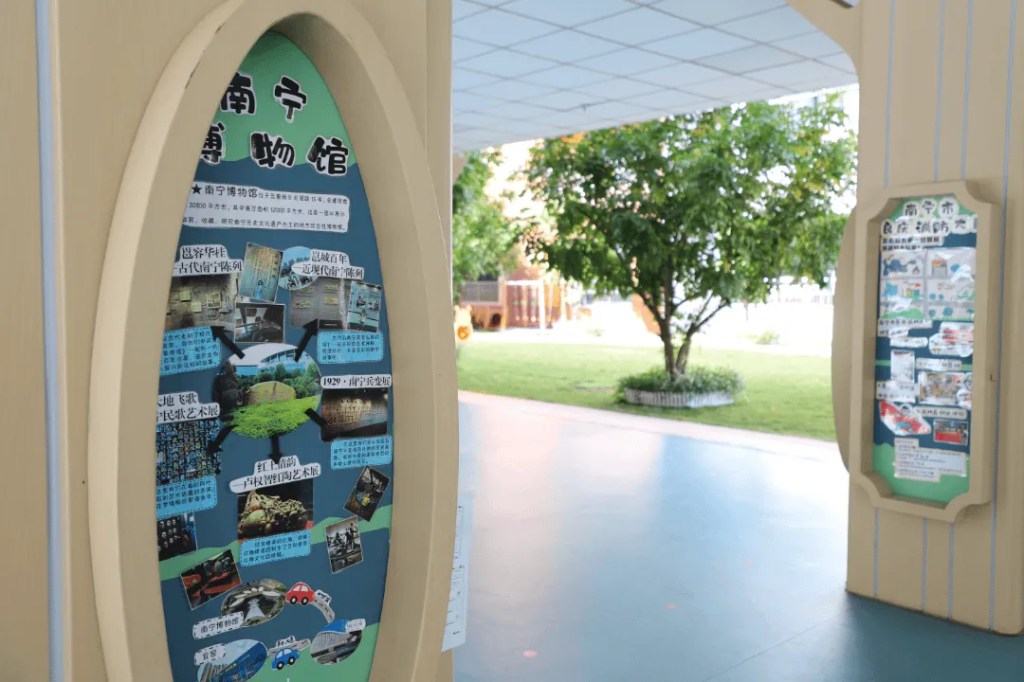
“You can see the ‘traces’ of our joint exploration in every corner of the kindergarten,” says the principal. These “traces” speak volumes, telling the story of this mutual journey. Drawing from their experience in creating a child-friendly kindergarten, Wuxiang No. 1 Kindergarten is also developing guidelines for such initiatives. These guidelines focus on innovating teaching methods, daily routines, curriculum activities, and management systems from a child’s perspective, while encouraging child participation. A multi-faceted evaluation system has been established—comprising self-evaluation, peer evaluation, child evaluation, and parent evaluation—to create an environment conducive to children’s growth.
 CCFU2089