What would a city look like from a child’s eye level?
Would it be a delightful play park where parents and children share moments of joy? An educational trip where students and teachers explore the mountains and the wonders of life? Or perhaps a journey of discovering the vibrancy of daily experiences, bringing a “fairy tale” vision closer to reality?
A city’s warmth and level of civilization are reflected in its kindness and friendliness toward children. Since being selected in 2022 as one of the first cities to pilot the national Child-Friendly City initiative, Hangzhou has made significant strides: pioneering child-friendly growth spaces, promoting inclusive public services for children, and fostering collaborative environments that support child development. The city has continuously prioritized child-friendly services in its key social projects, ensuring reforms benefit more children. Moreover, the principles of child-friendly policies are seamlessly woven into all aspects of urban development, creating a vision of tangible happiness for the community.
How does one build a child-friendly city? Hangzhou is writing its answer.
“One-Meter High” Ensures Safe Growth for Children, Expands All-Ages-Friendly Activity Spaces
“Highly recommended! This is the best family-friendly mall in Hangzhou,” “A new mall with a free play area for kids—we spent an hour there, and my child didn’t get bored!” Recently, Tianhong Mall, Hangzhou’s first certified child-friendly shopping district, has been gaining praise from parents on social media.
What makes this family favorite so appealing? The mall offers a range of child-friendly spaces, including children’s restrooms, a theater, an activity area, a puzzle game zone, a reading nook, and stroller rental services at the information desk. “These improvements are the result of small but impactful changes. Initially, Siqing Street introduced a ‘Top Ten Courtesies’ policy for child-friendliness. Later, we followed guidelines to incorporate child-friendly businesses throughout the mall, covering a wide array of needs for children,” said Sun Weiwei, Chair of the Women’s Federation in Shangcheng District.
In August, Hangzhou’s Municipal Office for Women and Children, in collaboration with the Commerce Bureau, issued the Guidelines for Child-Friendly Shopping Districts (Trial). The guidelines address space utilization, brand selection, event planning, and rights protection to meet children’s developmental needs. They recommend adjustments to lighting, barrier-free access, safety signage, and other features, as well as requirements for family interaction areas. This framework is backed by the city’s integrated approach, with leadership from Party committees, inter-departmental collaboration, social support, and active mall participation.
This is not Hangzhou’s first city-level policy initiative focused on child-friendly spaces. In earlier plans, including the Hangzhou National Land Spatial Plan (2021-2035), Public Facility Requirements for Hangzhou’s Spatial Planning, and Specialized Green Space Plan, Hangzhou incorporated specific standards for child-oriented facilities, laying a strong foundation for creating accessible spaces for children.
In recent years, Hangzhou has adapted public spaces to meet children’s needs for travel, recreation, learning, and safety. Child-friendly zones have been added to malls, neighborhoods, hospitals, schools, and community spaces across the city.
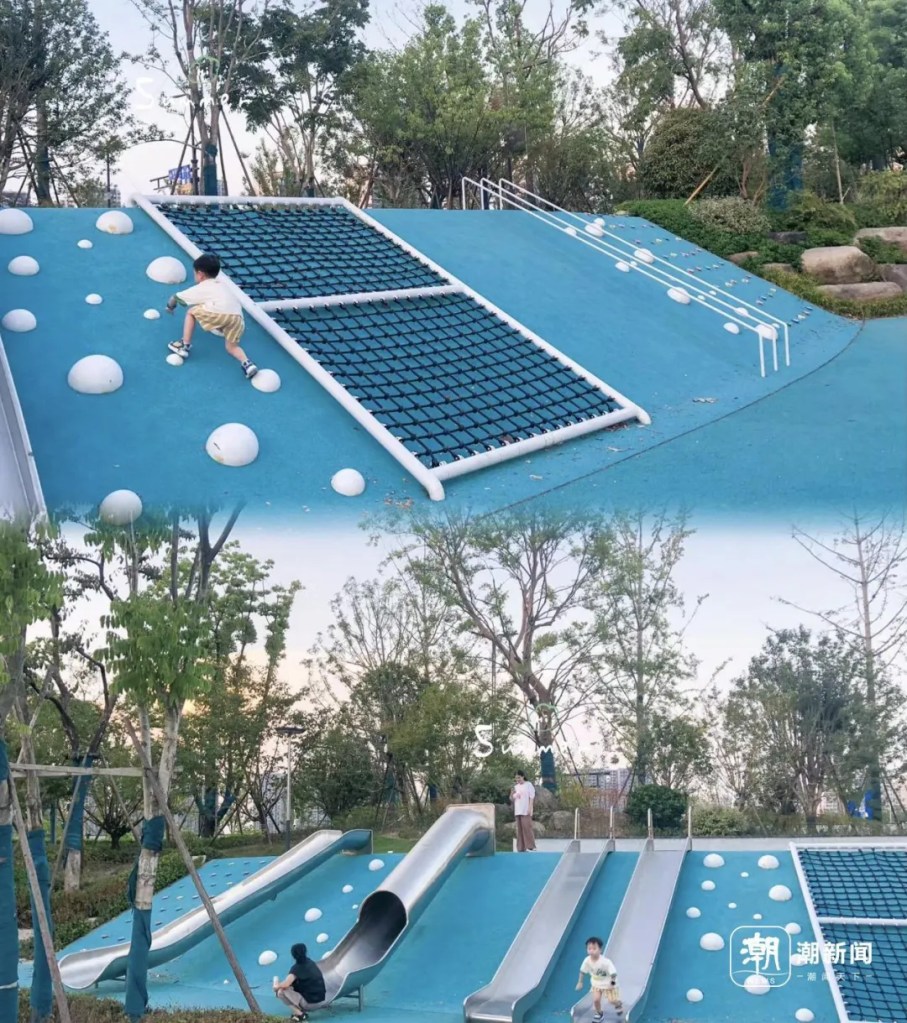
Some observant residents have noticed a new playground beneath the Tiaoxi Bridge on National Highway G235, featuring rubberized flooring with jump-rope designs and standard playground fixtures like slides and swings. These child-centered play spaces are multiplying across Hangzhou, meeting parents’ needs for convenient family outing spots.
Additional initiatives include 52 new “Knowledge Shuttle” bus lines, providing direct routes between residential areas and youth centers to support point-to-point school transit and ensure safe travel. The city is also creating 175 “Kids Parking Zones” to encourage proper parking of strollers, scooters, and bicycles. Hangzhou has also designated 471 “One-Meter High” accessible child-friendly spaces, including libraries and activity bases, significantly expanding recreational areas designed for children.
“One-Meter Perspective” Extends Service Reach, Promotes Inclusive Support for Worry-Free Growth
What if you need temporary childcare? Or guidance on parenting skills? By opening the Zheliban App and searching for “Healthy Hangzhou” to access the “Nurturing in Hangzhou” section, parents can find solutions to these needs.
In the “Growth Stations” section of “Nurturing in Hangzhou,” users can quickly locate nearby centers by area and book childcare services. Since 2021, Hangzhou has pioneered Growth Stations for infants and toddlers nationwide, featuring a unified “Little Sapling” logo in five colors, offering accessible, community-based childcare support for thousands of families.
Today, Hangzhou has established 710 Growth Stations citywide. Through embedded childcare services in high-traffic areas like neighborhoods, workplaces, and industrial parks, the city has built a convenient, safe, and layered system of inclusive childcare services.
In response to challenges such as limited childcare options between parental leave and school age, as well as uneven public service development in western areas, Hangzhou has taken proactive, innovative steps. For example, Gongshu District’s “Infant Care” services focus on children under two, addressing a critical gap in early childcare options. Pilot initiatives in Fuyang, Lin’an, Tonglu, Chun’an, and Jiande districts offer subsidies for childcare and developmental screenings to ease the financial burden on families. Xiaoshan and Linping districts provide integrated care for children with developmental delays through nursery programs at local maternal and child health hospitals, fostering early social inclusion and brightening the children’s futures.
In education, Hangzhou has been a national pioneer with its “Siblings Study Together” initiative, benefiting over 2,400 families. “Youth Centers at Your Doorstep” now cover every district and county, promoting a “15-Minute Youth Development Service Circle.” Children’s reading zones are available in all public libraries, while the “Happy Reading Express”—a mobile library—travels to rural schools, bringing books and broadening access to children’s public services across the region.
“One-Meter Wisdom” Infuses Vitality into the Future, Enabling Collaborative Development
“The shelves for children’s books are too high, and there are no stools for kids to reach them,” “There aren’t enough chairs, and the seats are too hard—soft seating would be nice.” This year, when a group of children visited the White Horse Lake Animation Museum, they praised the museum’s aesthetics but left some “sharp” suggestions as well.
The museum responded promptly, reorganizing bookshelves to align with different age groups, placing children’s books on the lower shelves and general books higher up. The reading area also gained more seating, with round tables and various small stools added to well-lit corners.
These young visitors all share a common role: they are members of Hangzhou’s Children’s Observation Group, a council made up of child representatives, expert advisors, and mentors. The group operates on a model where children lead, collecting suggestions in collaboration with families, schools, and communities, which are then acted upon by relevant departments.
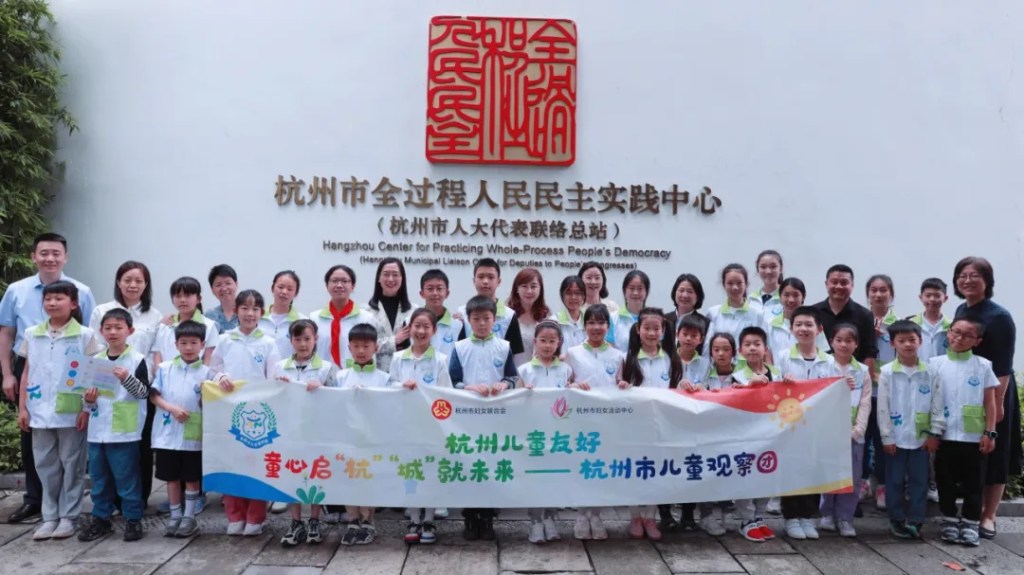
Following the concept of “Child-Friendly Hangzhou, Better Hangzhou,” the city has been building platforms for children to actively participate in society. Children’s voices and needs are woven into urban planning, providing the city with invaluable “one-meter wisdom” for governance.
In communities, projects like fitness hubs and children’s parking spots are implemented close to home; in scenic areas, stroller-friendly paths make family outings more enjoyable; in schools, 190,000 students now enjoy nap-friendly rest areas, supporting physical and mental well-being; in traffic safety, children act as “little designers,” transforming their ideas into school-route markers to create safe, joyful paths between home and school. As future leaders of the city, children are fully engaged in public affairs, fostering a synergy between their growth and urban development.
This collaborative approach between families, schools, government, and society is also reinforced by programs like parent schools, “Smart Parent” awards, and Family Day activities, creating a thriving support network. Across the city, there are now 3,449 parent schools or family education service stations in communities and villages, hosting nearly 10,000 family education activities. Expert family education teams and volunteer mentors have also been established to support families and youth, enhancing a collaborative education ecosystem. By bringing families to the forefront as the smallest units of a child’s happiness, Hangzhou’s “one-meter glow” lights the way to a brighter future for the city.
 CCFU2089